5E Fall Damage : The Harder They Fall Revising Falling Damage For 5e : Ok said barbarian would have to have relentless rage because as per the 500 ft/rd, you would have to have taken or given damage during the fall to maintain the rage.
5E Fall Damage : The Harder They Fall Revising Falling Damage For 5e : Ok said barbarian would have to have relentless rage because as per the 500 ft/rd, you would have to have taken or given damage during the fall to maintain the rage.. Get an overview of damage types and see examples for each here! Damage from falling objects determines the amount of damage dealt by an object based on its size. You fall about 500 feet in the first round of falling and about 1,500 feet each round thereafter. If damage reduces you to 0 hit points and fails to kill you, you fall unconscious (see appendix a). 5e has thirteen damage types:
If it's bigger just add an additional 30% of rolled damage more if smaller 30% less to the roll, to evade solving physics. Falls and great heights are some of the few things that can outright kill a player and most veteran ttrpg players can recount at least one or two characters. If you willingly fall, you could reduce the damage by 1 die (also phrased as reducing the effective distance by 10 feet). When do you get feats in 5e? Ok said barbarian would have to have relentless rage because as per the 500 ft/rd, you would have to have taken or given damage during the fall to maintain the rage.
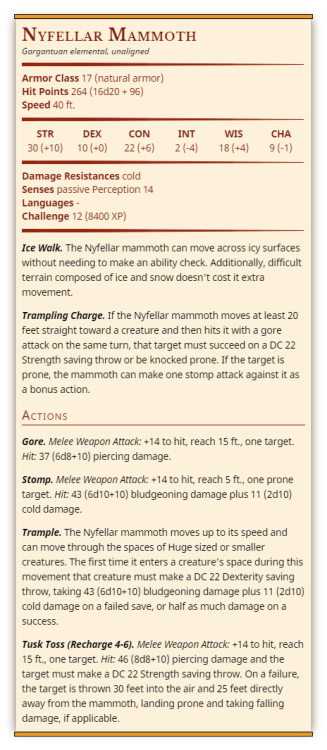
Writing And Rolling Nyfellar Mammoth Gargantuan Elemental Unaligned from 64.media.tumblr.com Death caused by fall damage causes the same 10% durability loss to equipment as a normal pve death. If you willingly fall, you could reduce the damage by 1 die (also phrased as reducing the effective distance by 10 feet). A dungeon master and player. Revising falling damage for 5e. The rules given on p.183 of the player's handbook simply state that a character 1d6 bludgeoning damage for every 10 feet it falls, to. 5e has thirteen damage types: If damage reduces you to 0 hit points and fails to kill you, you fall unconscious (see appendix a). This video demonstrates and explains falling damage in the game of dungeons & dragons 5e.
Damage from falling objects determines the amount of damage dealt by an object based on its size.
The rules given on p.183 of the player's handbook simply state that a character 1d6 bludgeoning damage for every 10 feet it falls, to. Note that this assumes that the object is made of dense, heavy material, such as stone. Should they take 1d6 falling damage? At the end of a fall, a creature takes 1d6 bludgeoning damage for every 10 feet it fell, to a maximum of 20d6. A pit trap opens beneath you, make a dexterity save dc 15 or fall and take 5d6 damage. You can choose a feat at 4th level, with further choices before your character reaches 20th level. @mikemearls @jeremyecrawford a monster is immune to damage from nonmagical bludgeoning weapons. If the creature lands before the spell ends, it takes no falling damage and can land on its feet, and the spell ends for that creature. Falling damage should continue to increase up to 1500 feet (450 meters) because if my math is correct that's when you reach terminal velocity if you re: Flying and falling in dungeons and dragons 5e taking to the skies and flying in dungeons and dragons can be one of the most. What type of damage is falling damage in 5e? 463 2.0 when you fall more than 5 feet, you take bludgeoning damage equal to half the distance you fell when you if you take any damage from a fall, you land prone. At the end of a fall, a creature takes 1d6 bludgeoning damage for every 10 feet it fell, to a maximum of 20d6.
And outputs the fall damage dice. A fall from a great height is one of the most common hazards facing an adventurer. I would typically allow a character to make a dc 15 dex saving throw to jump out of the way. Acid, bludgeoning, cold, fire, force, lightning, necrotic, piercing, poison, psychic, radiant, slashing, and thunder. If its bludgeoning, would a raging barb take half damage?
Cat Folk Race For Dnd 5e Album On Imgur from i.imgur.com You fall about 500 feet in the first round of falling and about 1,500 feet each round thereafter. If you willingly fall, you could reduce the damage by 1 die (also phrased as reducing the effective distance by 10 feet). 1d6 points of damage per 10 feet fallen, to a maximum of 20d6. The save is to not fall. Falls and great heights are some of the few things that can outright kill a player and most veteran ttrpg players can recount at least one or two characters. Acid, bludgeoning, cold, fire, force, lightning, necrotic, piercing, poison, psychic, radiant, slashing, and thunder. Choose up to five falling creatures within range. Note that this assumes that the object is made of dense, heavy material, such as stone.
Choose up to five falling creatures within range.
So i was thinking about falling damage recently, and specifically about how little danger falling represents to characters of a certain level, no matter how high the drop. The rules given on p.183 of the player's handbook simply state that a character 1d6 bludgeoning damage for every 10 feet it falls, to. Falling damage the basic rule is simple: Note that this assumes that the object is made of dense, heavy material, such as stone. Acid, bludgeoning, cold, fire, force, lightning, necrotic, piercing, poison, psychic, radiant, slashing, and thunder. If damage reduces you to 0 hit points and fails to kill you, you fall unconscious (see appendix a). Does he still take damage from falling? This video demonstrates and explains falling damage in the game of dungeons & dragons 5e. Fall damage is environmental damage inflicted upon a player when he falls from a certain height. You could simply increase falling damage, but that has the downside of making falling unrealistically lethal to low level characters and low cr creatures. I use the same rule the same for falling every 1d6 dice for 10ft of falling for the same size of the creature. However, by its nature, a spider is. You fall about 500 feet in the first round of falling and about 1,500 feet each round thereafter.
If it's bigger just add an additional 30% of rolled damage more if smaller 30% less to the roll, to evade solving physics. Ok said barbarian would have to have relentless rage because as per the 500 ft/rd, you would have to have taken or given damage during the fall to maintain the rage. You could simply increase falling damage, but that has the downside of making falling unrealistically lethal to low level characters and low cr creatures. Death caused by fall damage causes the same 10% durability loss to equipment as a normal pve death. Should they take 1d6 falling damage?
The Complete Guide To Lycanthropy In D D 5e Halfling Hobbies Trinkets from lh3.googleusercontent.com Falling damage the basic rule is simple: The loss of hit points has no effect on a creature's capabilities until the creature drops to 0 hit points. If it's bigger just add an additional 30% of rolled damage more if smaller 30% less to the roll, to evade solving physics. If you willingly fall, you could reduce the damage by 1 die (also phrased as reducing the effective distance by 10 feet). 1d6 points of damage per 10 feet fallen, to a maximum of 20d6. Does he still take damage from falling? Should they take 1d6 falling damage? Falling damage is almost always save negates.
This video demonstrates and explains falling damage in the game of dungeons & dragons 5e.
Death caused by fall damage causes the same 10% durability loss to equipment as a normal pve death. Flying and falling in dungeons and dragons 5e taking to the skies and flying in dungeons and dragons can be one of the most. However, by its nature, a spider is. Objects that fall upon characters deal damage based on their weight and the distance they have fallen. If its bludgeoning, would a raging barb take half damage? The damage is still the same. Falling damage should continue to increase up to 1500 feet (450 meters) because if my math is correct that's when you reach terminal velocity if you re: @mikemearls @jeremyecrawford a monster is immune to damage from nonmagical bludgeoning weapons. If it's bigger just add an additional 30% of rolled damage more if smaller 30% less to the roll, to evade solving physics. Ok said barbarian would have to have relentless rage because as per the 500 ft/rd, you would have to have taken or given damage during the fall to maintain the rage. The party stands at the brink of a 1,000 foot cliff. If the creature lands before the spell ends, it takes no falling damage and can land on its feet, and the spell ends for that creature. At the end of a fall, a creature takes 1d6 bludgeoning damage for every 10 feet it fell, to a maximum of 20d6.